
Perspective · Seagate, May 2024
Three truths about hard drives and SSDs
Authorized Reseller · Independent Architecture Advice
“Hard drives will soon be a thing of the past.” Welcome to the latest installment of the perennial hard drive extinction saga.
Projected to remain at or above a 7:1 premium over hard drives through at least 2027
Rising from 4.1ZB in 2023 at roughly a 25% CAGR
The share of data center storage needs the hard drive industry addresses
What NAND suppliers would need to invest; hard drives meet it with about $1B
Why is the “all-flash data center” premise flawed?
“Hard drives will soon be a thing of the past.” “All-flash arrays will soon replace disks and hybrid arrays in the data center.” “The data center of the future is all-flash.” The debate has spanned more than a decade now, and the predictions foretelling hard drives’ demise have not aged well over the years — but they seem to get increasingly brazen with time.
Without question, flash storage is well-suited to support applications that require high-performance and speed. And flash revenue is growing, as is all-flash-array (AFA) revenue. But not at the expense of hard drives. The premise underlying speculation around the death of hard drives is deeply flawed.
We are living in an era where the ubiquity of the cloud and the emergence of AI use cases have driven up the value of massive data sets. Hard drives, which today store by far the majority of the world’s exabytes (EB), are more indispensable to data center operators than ever. Even in recent years, when flash prices temporarily dropped to all-time lows, solid state drives (SSDs) did not displace hard drives in workloads requiring mass data storage.
It’s not a zero-sum game. In data centers, hard drives and flash have always worked in synergy, deployed in support of different services. In fact, in the era of generative AI, compute clusters closely coupled with flash technology indirectly fuel the downstream need for more hard drive EBs, since the generated content needs to be economically stored.
Truth #1: Will SSD pricing ever match hard drive pricing?
Myth: SSD pricing will soon match the pricing of hard drives. Reality: SSD and hard drive pricing will not converge at any point in the next decade.
The data is clear. Hard drives hold a firm cost-per-terabyte (TB) advantage over SSDs, which positions them as the unquestionable cornerstone of data center storage infrastructure. Even as the cost per TB of both SSDs and hard drives continues to decline through at least 2027, Seagate’s analysis of research by IDC, TRENDFOCUS and Forward Insights confirms that hard drives will remain the most cost-effective option for most enterprise tasks. The price-per-TB difference between enterprise SSDs and enterprise hard drives is projected to remain at or above a 7:1 premium through at least 2027.
This price-per-TB differential is particularly evident in the data center, where device acquisition cost is by far the dominant component in total cost of ownership (TCO). Taking all storage system costs into consideration — including device acquisition, power, networking and compute costs — a far superior TCO is rendered by hard drive-based systems on a per-TB basis.
Some AFA OEMs have begun designing their own custom high-density NAND devices, claiming theoretical TCO advantages at the system level. The problem with this logic is that adding dramatically higher levels of NAND density to a single device or system still doesn’t alter the stark cost-per-TB differential of the raw media. Another tactic concerns “effective terabytes” from data reduction — but in large deployments data reduction occurs higher up in the stack, and when data is encrypted it can’t be compressed because its entropy is so high that there is no pattern to simplify.
Truth #2: Could NAND supply ramp to replace hard drive capacity?
Myth: Supply of NAND can ramp to replace all hard drive capacity. Reality: Entirely replacing hard drives with NAND would require untenable CapEx investments.
According to the Q4 2024 NAND Market Monitor report from industry analyst Yole Intelligence, the entire NAND industry shipped 3.9ZB from 2015 to 2024, while having to invest a staggering $223 billion in CapEx — approximately 43% of their combined revenue. In contrast, the hard drive industry addresses the vast majority — about 87% — of data center storage needs in a highly capital-efficient manner. Between 2015 and 2024 Seagate shipped 4ZB of storage, with capital investments totalling $4.5 billion, or only around 4.9% of total hard drive revenue. That equals approximately $57 billion per ZB for the NAND industry versus about $1.1 billion per ZB for hard drive production.
According to Seagate internal estimates, NAND suppliers would need to invest roughly $240 billion in additional CapEx to replace future enterprise hard drive demand — whereas hard drives themselves can meet that demand with an investment of only about $1 billion. Using Kioxia’s Fab7 Phase 1 as an example, building a single green-field NAND fab costs about $6.8 billion, so $240 billion would roughly equal 35 new fabs.
When accounting for broader production demand — including phones, tablets and other devices — total NAND investment needs would balloon to an estimated $414 billion, roughly 50 new fabs. That is more than 15 times the projected 2028 revenue of the entire hard drive industry, estimated at approximately $22 billion according to IDC. These facilities would need to be built, scaled, tested, qualified and brought online to full production in the next three to four years, more than doubling the number of NAND fabs worldwide in less than four years.
Truth #3: Why do hard drives and flash coexist in the data center?
Looking across enterprise-grade storage devices, hard drives remain unmatched in cost efficiency, scalability and sustainability.
Lowest Cost per Gigabyte
Compared to SSDs and DRAM, hard drives deliver the lowest cost per gigabyte — the dominant factor in TCO where device acquisition cost leads.
Largest Exabyte Volume
Hard drives ship the largest volume of exabytes. In 2025, hard drive EB production will be almost 2.5× that of SSDs, and 4× in enterprise and data center markets.
Lowest CapEx Intensity
Hard drives require the lowest CapEx intensity as a percentage of revenue — about 4.9% versus roughly 43% for the NAND industry.
Lowest Embodied Carbon
They also offer the lowest embodied carbon footprint per TB, reinforcing their role as the most efficient and sustainable storage choice at scale.
What does the hard drive and SSD data mean for your architecture?
NAND solutions serve specific data center workloads efficiently, but the idea that data centers will fully rely on them is littered with pitfalls. Beyond the risks and the implausibility of the NAND industry replacing the hard drive supply, volatile pricing adds another layer of uncertainty for businesses seeking supply stability and the best TCO for their storage.
The idea that NAND could completely replace hard drives in the foreseeable future is highly improbable, if not impossible. The industry would have to overcome formidable financial and logistical obstacles while investing a large amount of capital and technology in a market that isn’t prepared for a change that would upend current data center architecture.
This storage media synergy is alive and well, while the conjecture around hard drives’ obsolescence lacks credibility and will not ultimately pan out. While flash excels at performing specific and high-performance tasks, hard drives will continue to be the primary destination for data center EBs, offering a reliable, cost-effective and widely adopted solution for the foreseeable future.
Practically, that means designing for both: a flash tier sized to the small proportion of workloads that genuinely need sub-millisecond latency, and mass-capacity hard drive storage underneath it for everything else. That is exactly the architecture our solution architects size for.
Which reports cover hard drive and SSD cost per terabyte?
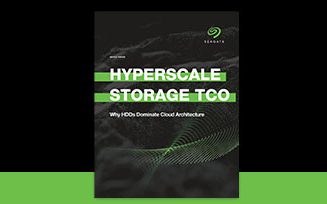
Data and analysis behind the storage-media synergy argument.
Hard drives and SSDs: frequently asked questions
The pricing, supply and workload questions behind every all-flash-versus-hybrid decision.
No — SSD and hard drive pricing will not converge at any point in the next decade. Seagate’s analysis of research by IDC, TRENDFOCUS and Forward Insights projects the price-per-TB difference between enterprise SSDs and enterprise hard drives to remain at or above a 7:1 premium through at least 2027, even as the cost per TB of both continues to decline.
No. Hard drives today store by far the majority of the world’s exabytes and are more indispensable to data center operators than ever. Even in recent years, when flash prices temporarily dropped to all-time lows, SSDs did not displace hard drives in workloads requiring mass data storage.
According to Seagate internal estimates, NAND suppliers would need to invest roughly $240 billion in additional CapEx to replace future enterprise hard drive demand — whereas hard drives themselves can meet that demand with an investment of only about $1 billion. Including broader NAND demand from phones and tablets, total investment needs would reach an estimated $414 billion, roughly 50 new fabs.
The hard drive industry addresses about 87% of data center storage needs. In 2024 the ratio of installed hard drive to SSD capacity in cloud and non-cloud data centers was 7:1, and IDC forecasts this to stay around six to seven times for the foreseeable future.
Not in practice. The “effective terabytes” argument assumes data reduction such as compression multiplies usable SSD capacity, but in large deployments data reduction occurs higher up in the stack, rendering it irrelevant at the storage level. Encrypted data also can’t be compressed, because its entropy is so high there is no pattern to simplify.
Installed hard drive base is projected to rise from 4.1ZB in 2023 to more than 10.5ZB by 2028, a compound annual growth rate of approximately 25%. Total enterprise storage is projected to grow by 8,528EB between 2023 and 2028, reaching 14 zettabytes.
Design for both. Size a flash tier for the small proportion of workloads that genuinely need sub-millisecond latency, and put mass-capacity hard drive storage underneath it for everything else. Hard drives handle workloads that flash should not, and flash handles workloads that hard drives should not.
Yes. Our storage specialists will build a cost-per-terabyte and TCO comparison across all-flash, hybrid and hard-drive-based designs for your actual workload profile. Call 844-356-5142 or request an architecture review online.
Model the right flash and hard drive balance
Our storage specialists are here to help you find the right solution for your data challenges. Talk to a BlueAlly solution architect about the right flash and hard drive balance for your workloads.
No-cost architecture assessment
Cost-per-terabyte and TCO modelling for your workload mix
Right-sized flash and hard drive tiering
Flexible procurement — CapEx or OpEx
Talk to an Expert
with a BlueAlly Solution Architect