
Seagate Perspectives · AI
Storage for the AI era: why AI runs on hard drives
Authorized Reseller · Validated Configurations · Expert Guidance
Storing and activating mass data is critical to the next wave of AI innovation.
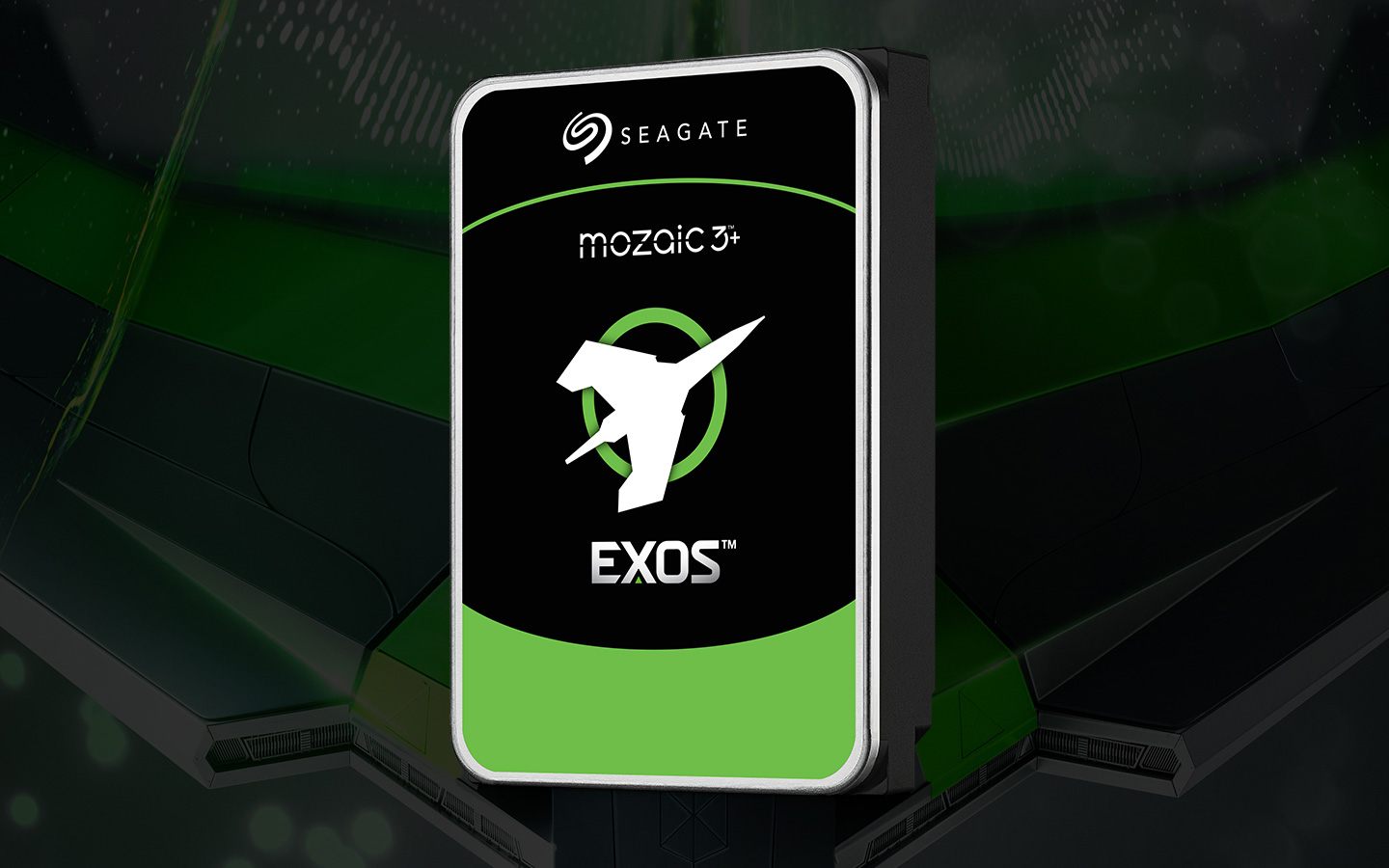
The world's largest hyperscale and cloud data centers store 90% of their online exabytes on hard drives
Hard drives are 6× more cost-efficient to acquire than SSDs on a cost-per-TB basis
Hard drive manufacturing is 9× more capital-efficient than the NAND industry
Hard drives have 10× less embodied carbon and use 4× less operating power per TB than SSDs
All four figures are as published by Seagate Technology, Data Storage for AI.
Why does AI at scale need a balance of memory and storage?
App developers are racing to train and deploy AI models. The focus has been on finding the right data and ramping up computing power. As AI models and applications proliferate, figuring out how to store the massive amounts of exabytes they will generate becomes an urgent challenge.
Supporting AI workloads requires a mix of important memory and storage technologies across the AI data workflow. But ultimately, AI at scale requires hard drives.
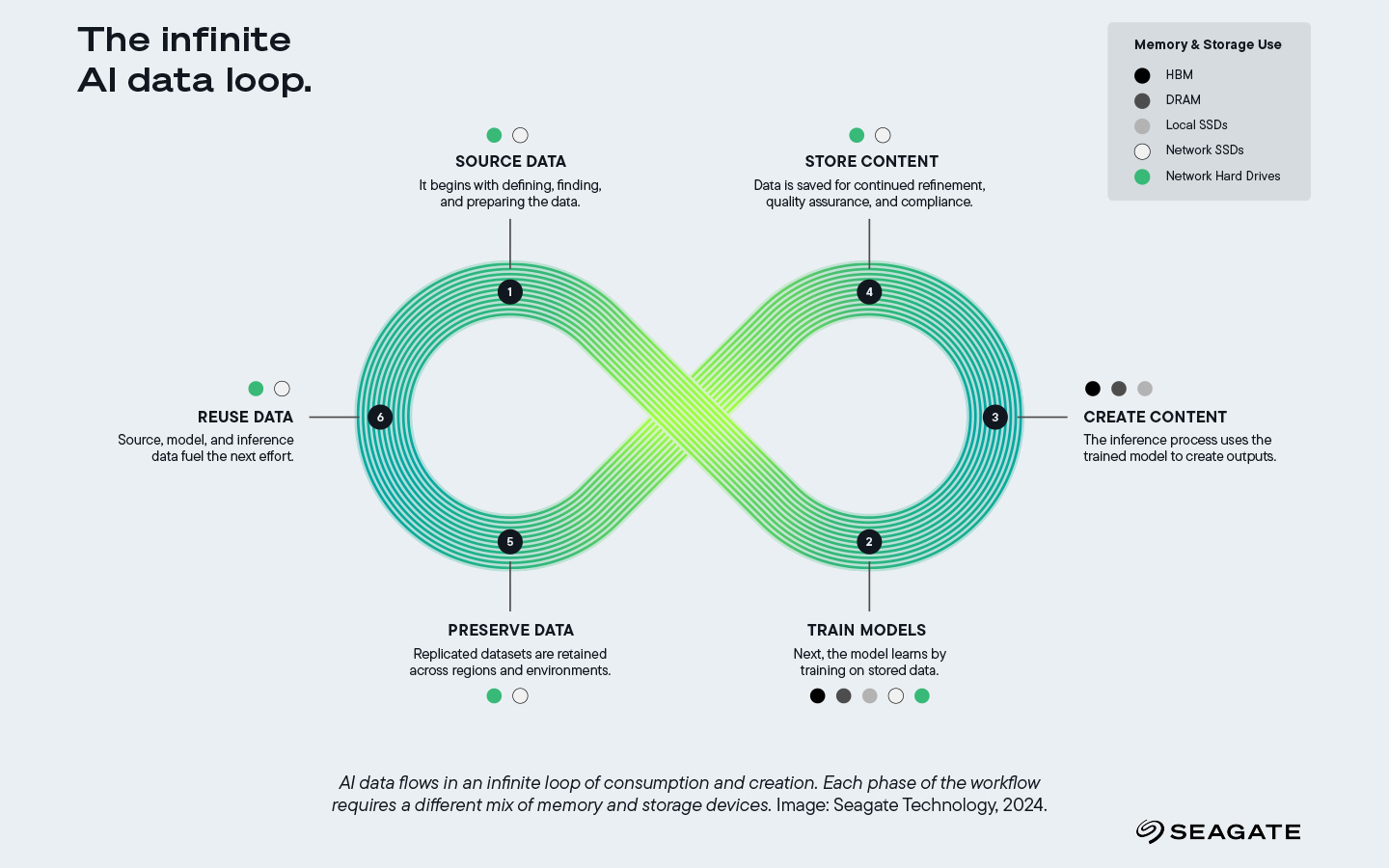
Which memory and storage tiers does an AI workflow use?
Feeding AI the data it needs to learn, create, and improve requires a broad range of storage technologies. From high-throughput memory to high-capacity hard drives, determining the right storage mix for any AI workload is about balancing the need for performance, cost, and scalability.
Where does most AI data end up after training?
AI compute clusters train, run, and optimize language models. GPUs, CPUs, NPUs, and TPUs are closely coupled with high-performance memory devices, offering terabyte- and even petabyte-per-second throughput for extreme computation. The input and output data they use and create flows into networked storage clusters where it's preserved long-term, mostly on hard drives, to support future re-training, quality control, and compliance.
Why do the largest data centers store 90% of exabytes on hard drives?
Today, the most advanced AI innovators also operate the world's largest hyperscale and cloud data centers. These companies choose to store 90% of their online exabytes on hard drives because they understand the unique price-to-performance value that hard drives offer for mass-capacity storage. Though SSDs are also a critical technology, hard drives will continue to store the majority of data as more AI-optimized architectures are deployed.
Why are hard drives ideal for AI storage at scale?
The data explosion of the AI era demands mass-capacity storage that scales. While solid-state drives (SSDs) are important for low-latency workloads, AI at scale runs on hard drives. Three key factors explain why.
On a cost-per-TB basis, hard drives are 6× more efficient to acquire than SSDs, making them the logical choice for AI data storage buildouts.
Measured in capital expenditure, hard drive manufacturing is 9× more efficient than the NAND industry.
Hard drives use 4× less operating power per terabyte and have 10× less embodied carbon than SSDs.
Size mass-capacity storage for an AI data workflow
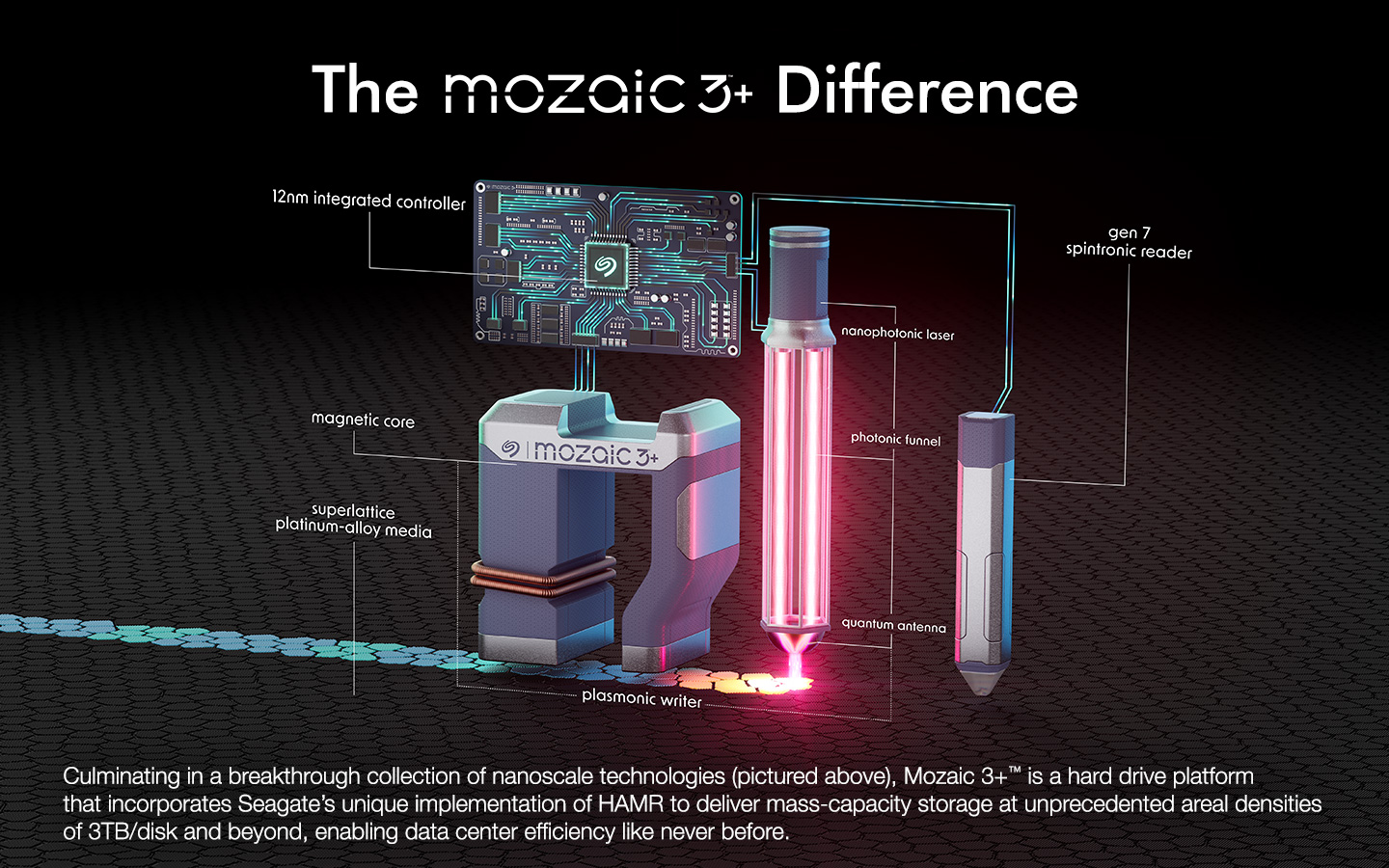
AI at scale runs on hard drives. BlueAlly helps AI infrastructure operators size and deploy mass-capacity Exos and Mozaic-powered storage across the entire AI data workflow—from ingest to long-term retention.
We've developed a partnership with Seagate that lets us compete at the highest level on price and service. That translates into the widest range of in-stock products, fast shipping, and the advice of certified product experts—without the pain of premium pricing. If you need additional guidance in sourcing the right product, our team can bring you together with the presale engineering team.
How do hard drives support the entire AI data workflow?
By supporting the entire AI data workflow, hard drives play a crucial role in validating AI models. Realizing the full potential of AI requires data—and the storage that upholds it.
More about AI and data storage
Realizing the full potential of AI requires data—and the storage that upholds it.
Storage for the AI era: frequently asked questions
Why AI runs on hard drives, and how BlueAlly can help you build for it.
App developers are racing to train and deploy AI models. As AI models and applications proliferate, figuring out how to store the massive amounts of exabytes they will generate becomes an urgent challenge. Supporting AI workloads requires a mix of important memory and storage technologies across the AI data workflow. But ultimately, AI at scale requires hard drives.
AI compute clusters train, run, and optimize language models. The input and output data they use and create flows into networked storage clusters where it's preserved long-term, mostly on hard drives, to support future re-training, quality control, and compliance. The most advanced AI innovators, who also operate the world's largest hyperscale and cloud data centers, choose to store 90% of their online exabytes on hard drives.
The data explosion of the AI era demands mass-capacity storage that scales. Three key factors explain why AI at scale runs on hard drives: economies of scale (on a cost-per-TB basis, hard drives are 6× more efficient to acquire than SSDs), exabyte production at scale (hard drive manufacturing is 9× more capital-efficient than the NAND industry), and sustainability at scale (hard drives use 4× less operating power per terabyte and have 10× less embodied carbon than SSDs).
Though SSDs are also a critical technology, hard drives will continue to store the majority of data as more AI-optimized architectures are deployed. While solid-state drives are important for low-latency workloads, AI at scale runs on hard drives because of the unique price-to-performance value they offer for mass-capacity storage.
BlueAlly is an authorized Seagate reseller. Our solution architects help AI infrastructure operators size and deploy mass-capacity Exos and Mozaic-powered storage across the AI data workflow, with validated configurations, competitive pricing, and flexible procurement — CapEx or OpEx.
Request a validated mass-capacity AI storage configuration
Our storage specialists are here to help you find the right solution to solve your data challenges. Request a validated mass-capacity storage configuration and authorized-reseller pricing from a BlueAlly solution architect.
No-cost architecture assessment
Mass-capacity storage sized for your AI workflow
Price-to-performance and TCO projection
Flexible procurement — CapEx or OpEx
Talk to an Expert
with a BlueAlly Solution Architect