
Authorized Seagate Reseller

Call a Specialist Today! 844-356-5142

Case Study · Factory AI Innovations

Autonomous IIoT monitoring in Seagate’s factories

Authorized Seagate Partner · Competitive Pricing · Proven at Scale

Explore how Seagate leveraged IIoT sensors and deep learning to autonomously monitor equipment, detect anomalies, and optimize processes. · 11 minute read

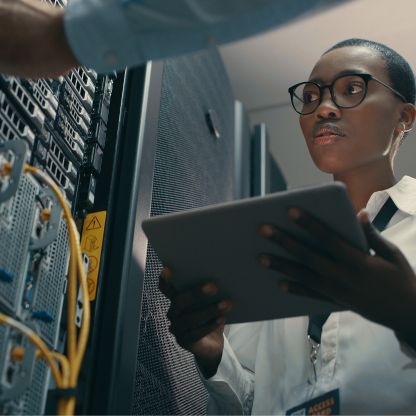
Engineer holding a tablet while inspecting a server rack with yellow network cables
2.3Minferences
In 90 Days

2.3 million inferences in 90 days, driving actionable insights across operations

7,172AI models
Autonomous Monitoring

Each model powers autonomous monitoring of key process input variables (KPIVs)

12seconds
Detect & Alert

Average time to process hundreds of variables, detect issues, and alert engineers

Billions
Data Points / Day

The system processes billions of data points per day to drive effective action

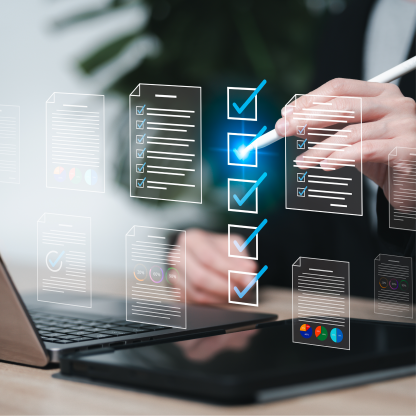
Hand using a stylus over a laptop with a holographic checklist marked with blue checkmarks representing real-time AI inference

Why did Seagate combine machine learning with factory IIoT sensors?

Seagate's Global Factory Information Technology (GFIT) team set out to assess AI-based solutions to apply within the company's factories with an emphasis on realizing value. Within the company's manufacturing facilities, a diverse assortment of complex semiconductor wafer processing equipment contains a significant deployment of industrial internet of things (IIoT) devices. These generate an immense amount of data, creating a rich and complex dataset that is ideal for AI analysis and processing.

The team started this project because they knew their tools generated vast amounts of data that could inform process and tool health. However, engineers were using a small fraction of it because they had to manually create numerous charts with static control limits. Traditional statistical process control (SPC) has demonstrated limited success within the factory control space.

They soon developed the concept of an autonomous monitoring system, able to monitor sensor-connected tools in the factory automatically, with integrated workflows to provide alerts on deviations. At its core, a Reconstruction Error-based Deep Learning 1-Dimensional Convolutional AutoEncoder effectively learns a golden tool fingerprint that represents the optimal process setup.

The goal: deploying AI for process improvement.

The mission was to utilize sensor data to drive operational efficiencies and product quality. They aimed to install an unsupervised detection and containment system leveraging AI models to monitor process and tool health. This would allow the engineering organization to identify deviations from historical populations and enact a control plan to contain or correct excursions. The team deployed the system across multiple Seagate factory commodities, while continuing to identify upgrade opportunities in the framework.

What data quality and scalability problems did the platform face?

The GFIT team faced challenges in their initial steps to create their new autonomous monitoring system, related to data accuracy, complexity and scalability, real-time decision-making, situational awareness, validation, and consumption.

Data accuracy and reliability

Data collected at the required rate can have issues from sensor degradation or network congestion and signal interference. Diverse machines may not use consistent data formats.

Complexity and scalability

Expanding to cover a diverse set of sensors connected to a wide range of toolsets in multiple factories presents integration and scalability challenges.

Intricate decision-making

Determining what constitutes an anomaly and accurately detecting it in real time requires a comprehensive solution.

Situational awareness and context

Advanced autonomous monitoring requires a contextual understanding of events combined with the ability to make decisions.

Validation

Validating system reliability and that goals are met requires significant time and resources from subject matter experts.

Consumption

Early systems generated thousands of alerts for potential failures that overwhelmed maintenance teams.

Data scientist in glasses looking at a screen with lines of code overlaid

How does Seagate’s autonomous IIoT monitoring platform work?

The team carefully reviewed their previous efforts, strengths, and challenges, which led to the successful development and deployment of a new autonomous IIoT data monitoring platform. This AI-based system monitors Seagate's factory equipment and processes, scanning the IIoT domain to identify areas needing "human-in-the-loop" validation. AI-generated inferences are contextualized and delivered to relevant SMEs for decision-making, effectively closing the feedback loop with actionable insights or additional data collection.

Seagate's use of unsupervised anomaly detection through deep learning automates the initial stages of grouping analysis and data dispositioning. By the time a human enters the decision-making loop, the analytics are already complete. This democratization of analytics empowers equipment and process engineering teams to leverage AI — delivering real-time insights directly to SMEs with sufficient context to inform sound decisions.

"We're developing and driving the technology, but the engineering partnership and continuous engagement provides valuable feedback that pushes us to continually improve the system."

Mark Gorman
Senior Staff Data Scientist, Seagate GFIT
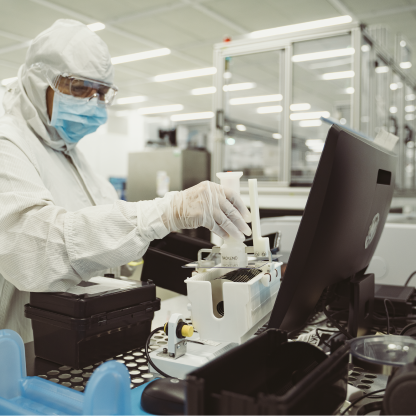
Cleanroom technician in a white suit working with lab equipment at a bench

What did 7,172 AI models and 2.3 million inferences deliver?

The new autonomous monitoring system has delivered numerous transformative benefits including lower tool cost of ownership (TCO), democratized analytics, and enhanced decision-making capabilities. Processing billions of data points per day, the system effectively consumes, processes, and drives effective actions within the engineering organization.

Enhanced maintenance actions

ML models predict equipment failures that can cause large yield events, letting teams repair proactively—reducing unplanned downtime and extending equipment lifespans.

100× more data, no code

An AI-enabled visualization application lets engineers discriminate 100 times more data without the requirement for coding or data science skills.

Lower tool cost of ownership

Consistent monitoring of tool sensor data catches issues early—avoiding costly unscheduled or emergency repairs and reducing rework and scrap.

"Seagate's AI integration with IIoT is a force multiplier for operations transformation. It provides real-time equipment insights facilitating predictive maintenance opportunities with an overall lower cost of ownership. The deployment of thousands of AI models that process billions of data points delivers fast actionable insights. This allows engineering stakeholders to work smarter, not harder."

Mark Gorman · Senior Staff Data Scientist, Seagate
BlueAlly Authorized Seagate Reseller

How does autonomous monitoring affect Seagate drive reliability?

Autonomous monitoring is how Seagate keeps its own factories running at peak quality and lowest tool cost of ownership—the same commitment to reliability that goes into every drive. BlueAlly helps you put that portfolio to work in your data center.

We've developed a partnership with Seagate that lets us compete at the highest level on price and service. That translates into the widest range of in-stock products, fast shipping, and the advice of certified product experts—without the pain of premium pricing. If you need additional guidance in sourcing the right product, our team can bring you together with the presale engineering team.

Proven manufacturing reliability
Full Exos & Mozaic portfolio
In-stock products, fast shipping
Flexible procurement — CapEx or OpEx

Our wealth of experience in transformational IT drives government, regulated industries, Fortune 500 companies, and businesses of all sizes across the United States.

Operating out of strategic centers across the US, BlueAlly runs:

Support Desk
24/7 Security Operations Center (SOC)
Integration Center — hardware warehousing
DiskDataWorks.com is a part of BlueAlly

Autonomous monitoring: frequently asked questions

How Seagate applies IIoT and AI for autonomous monitoring on the factory floor.

Talk to a solution architect about Seagate drives

The process precision behind autonomous monitoring is one reason Seagate drives are trusted at scale. Talk to a BlueAlly solution architect about the right Seagate configuration for your environment.

Full Exos, Mozaic & enterprise portfolio

Validated configurations for your workload

Authorized-reseller pricing

Flexible procurement — CapEx or OpEx

Talk to an Expert

with a BlueAlly Solution Architect