Authorized Seagate Reseller

Call a Specialist Today! 844-356-5142

Case Study · Factory AI Innovations

AI in Seagate’s Enhanced Automated Vision System (EAVS)

Authorized Seagate Partner · Competitive Pricing · Proven at Scale

The Factory team used AI to reimagine the Enhanced Automated Vision System (EAVS), achieving flawless quality control, reducing defects, and saving millions in operational costs. · 6 minute read

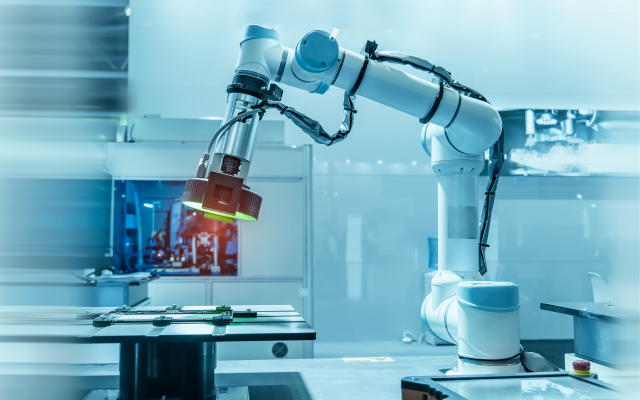
White robotic arm with a green-lit gripper performing automated inspection in a lab
37%reduction
Defective Parts / Million

DPPM dropped from 243 at project start to 153 by January 2025

97%acceptance
HGA Lot Acceptance

97% lot acceptance across 35 shipments, vs. the 86.8% baseline

34machines
Full Deployment

ML solutions deployed across all 34 EAVS machines by November 2024

$2.6Msaved
Cost & Space

Saved via workforce reallocation and reduced cleaning; reclaimed 77 sq. meters of clean room

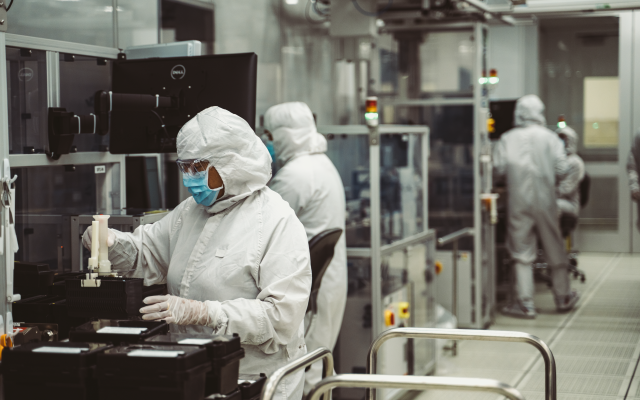
Workers in white cleanroom suits at a Seagate manufacturing inspection line

Why did Seagate rebuild EAVS defect detection with machine learning?

Since the 2010s, manufacturing vision systems have rapidly advanced, with AI integration offering significant benefits. In Seagate's slider factory, EAVS machines were initially seen as limiting throughput, measured by unit per hour (UPH) and first pass yield (FPY) for air bearing surface (ABS) and poles, relative to the predetermined overhead rate (POR). The team identified image processing time as a key area for improvement to meet POR targets.

Cost was another challenge. Enhancing EAVS detection capabilities required a strong return on investment (ROI) without compromising quality. The strict "C=0" (no defects found in the accepted sample size) quality assurance (QA) standard meant a single defect in sample lots triggered full rescreening and recleaning of shipments.

What were the EAVS throughput and rescreening goals?

The slider team set both short-term and long-term goals. Short-term goals included replacing conventional image processing with a machine learning-integrated solution to improve defect detection in the final slider inspection. Also planned was improving outgoing defective parts per million (DPPM) and lot acceptance rates (LAR) to ensure downstream slider quality. An additional aim was to not impact EAVS machine UPH throughput or costs.

Long-term goals focused on QA and traceability improvement for downstream failure analysis. For QA, the team planned to replace physical parts handling by using images captured with the EAVS system. Using EAVS images for in-process quality assurance (IPQA) inspection would not only help reduce the physical handling of parts, but also improve slider cleanliness.
What did template-based image processing cost in engineering time?

Before AI integration, the image processing method required extensive engineering resources for template creation and maintenance. Developing new templates took weeks, and engineers continuously fine-tuned them to sustain defect detection capabilities. Rule-based image processing struggled with detecting defects in transition width and near slider edges, leading to missed defects and lower detection accuracy. Enhancing EAVS detection capabilities required a strong ROI without compromising quality.

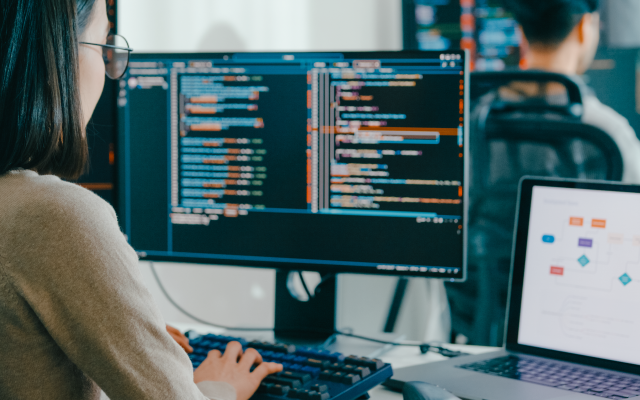
Software engineer working at dual monitors of code developing the machine learning solution

How did machine learning replace conventional EAVS image processing?

To address these challenges, the team replaced conventional image processing with a machine learning-integrated solution. This led to upgraded defect detection and improved DPPM and LAR rates. This transition also helped to maintain EAVS machine UPH without added costs. Seagate Research Group (SRG) developed the SliveLine Bridge (SLB) as an edge device to enable real-time inferencing, chosen for its cost advantage over high-performance workstations and its alignment with the "Seagate on Seagate" strategy.

The AI-driven solution integrated multiple technologies, including a centralized machine learning (ML) operations platform, global monitoring tools, on-premises S3 storage, data loaders, a common data service, and edge device integration with equipment. This comprehensive approach ensured immediate results for disposition decisions and minimized performance gaps between original and quantized (lower precision) models. Successful implementation required collaboration across Seagate teams in model development, IT infrastructure, system integration, machine software, edge hardware, model optimization, and shopfloor execution.

"Integrating AI into our vision system has provided us with a new perspective into reducing product defects, improving processes, and reducing costs."

Lay See Lim
Engineering Director, Slider Engineering
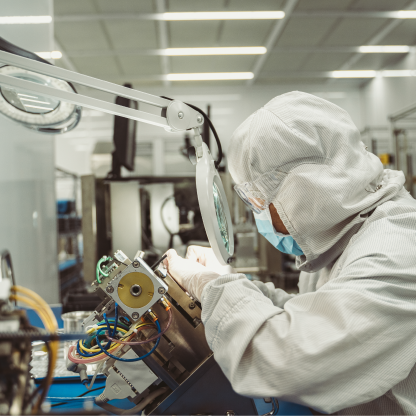
Cleanroom technician assembling wired equipment under a magnifier lamp

What did AI-enabled EAVS deliver across 34 machines?

Seagate's deployment of EAVS integrated with AI significantly transformed business operations, streamlining workflows and enhancing efficiency. By implementing this solution across all 34 EAVS machines, the team completed this scaling effort by November 2024, marking a major operational excellence milestone.

Higher FPY rates

ABS FPY increased from 60% to 74%, and pole FPY from 80% to 86%, reducing rework and waste.

Cost and space savings

The company saved $2.6 million through workforce reallocation and reduced cleaning costs, as well as reclaimed 77 square meters of clean room space.

BlueAlly Authorized Seagate Reseller

How does EAVS quality control affect the drives you buy?

Flawless quality control on the factory floor is why Seagate drives earn their reputation for reliability. BlueAlly puts that portfolio within reach—helping you source and deploy Exos, Mozaic and more for your workloads.

We've developed a partnership with Seagate that lets us compete at the highest level on price and service. That translates into the widest range of in-stock products, fast shipping, and the advice of certified product experts—without the pain of premium pricing. If you need additional guidance in sourcing the right product, our team can bring you together with the presale engineering team.

Factory quality you can trust
Full Exos & Mozaic portfolio
In-stock products, fast shipping
Flexible procurement — CapEx or OpEx

Our wealth of experience in transformational IT drives government, regulated industries, Fortune 500 companies, and businesses of all sizes across the United States.

Operating out of strategic centers across the US, BlueAlly runs:

Support Desk
24/7 Security Operations Center (SOC)
Integration Center — hardware warehousing
DiskDataWorks.com is a part of BlueAlly

EAVS case study: frequently asked questions

How Seagate applied AI to its automated vision system—and what it means for you.

Authorized-reseller pricing on Exos and Mozaic drives

The quality control behind EAVS is one reason Seagate drives are trusted at scale. Talk to a BlueAlly solution architect about the right Seagate configuration for your environment.

Full Exos, Mozaic & enterprise portfolio

Validated configurations for your workload

Authorized-reseller pricing

Flexible procurement — CapEx or OpEx

Talk to an Expert

with a BlueAlly Solution Architect